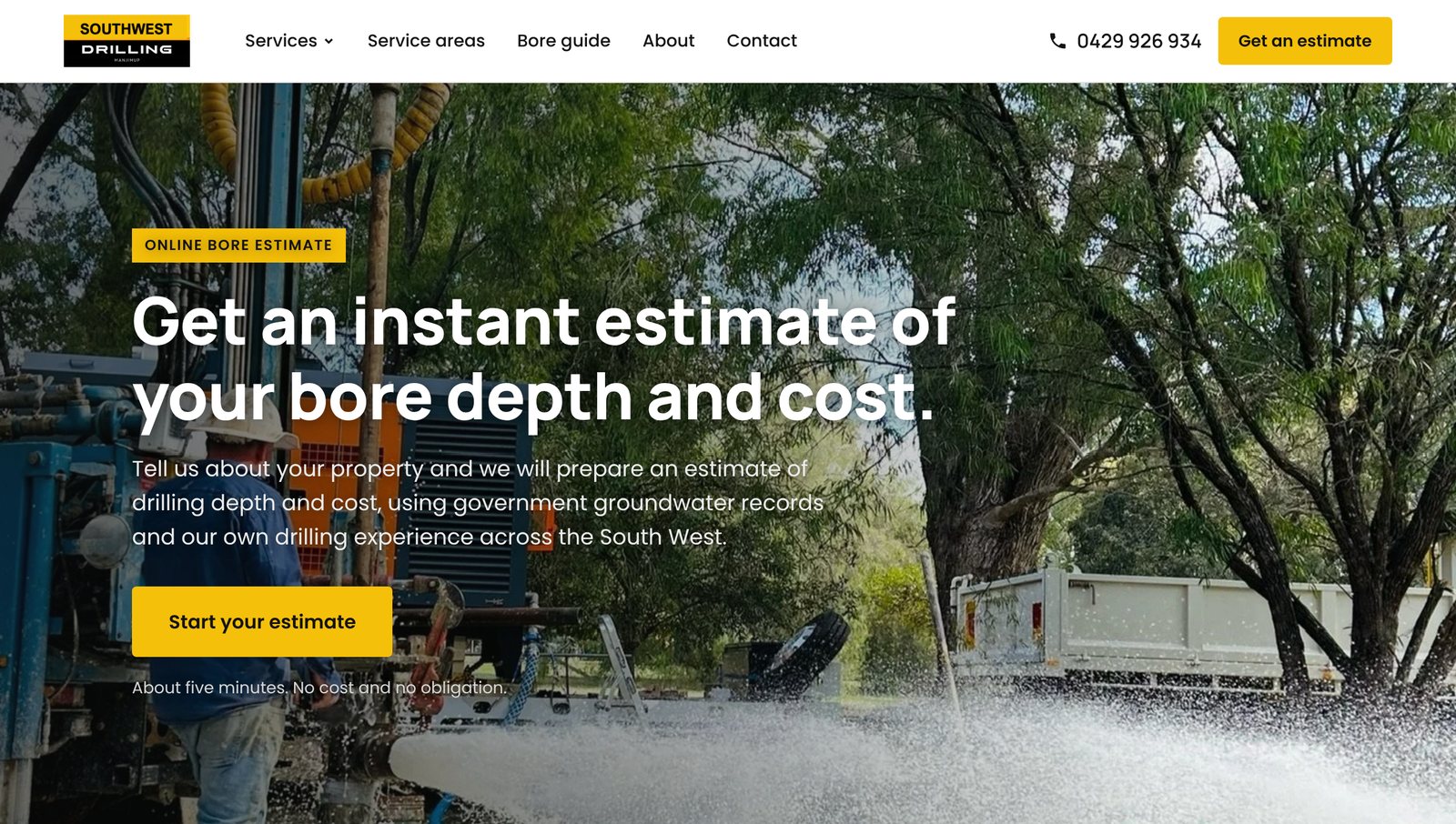
The situation
Every enquiry meant a phone call, and often a long drive
Enquiries came in directly, and depth and cost were judged by the driller, often after travelling to a remote site for a job that might not be won.
Quotes and acceptance were handled outside any shared system.
01 · Site location
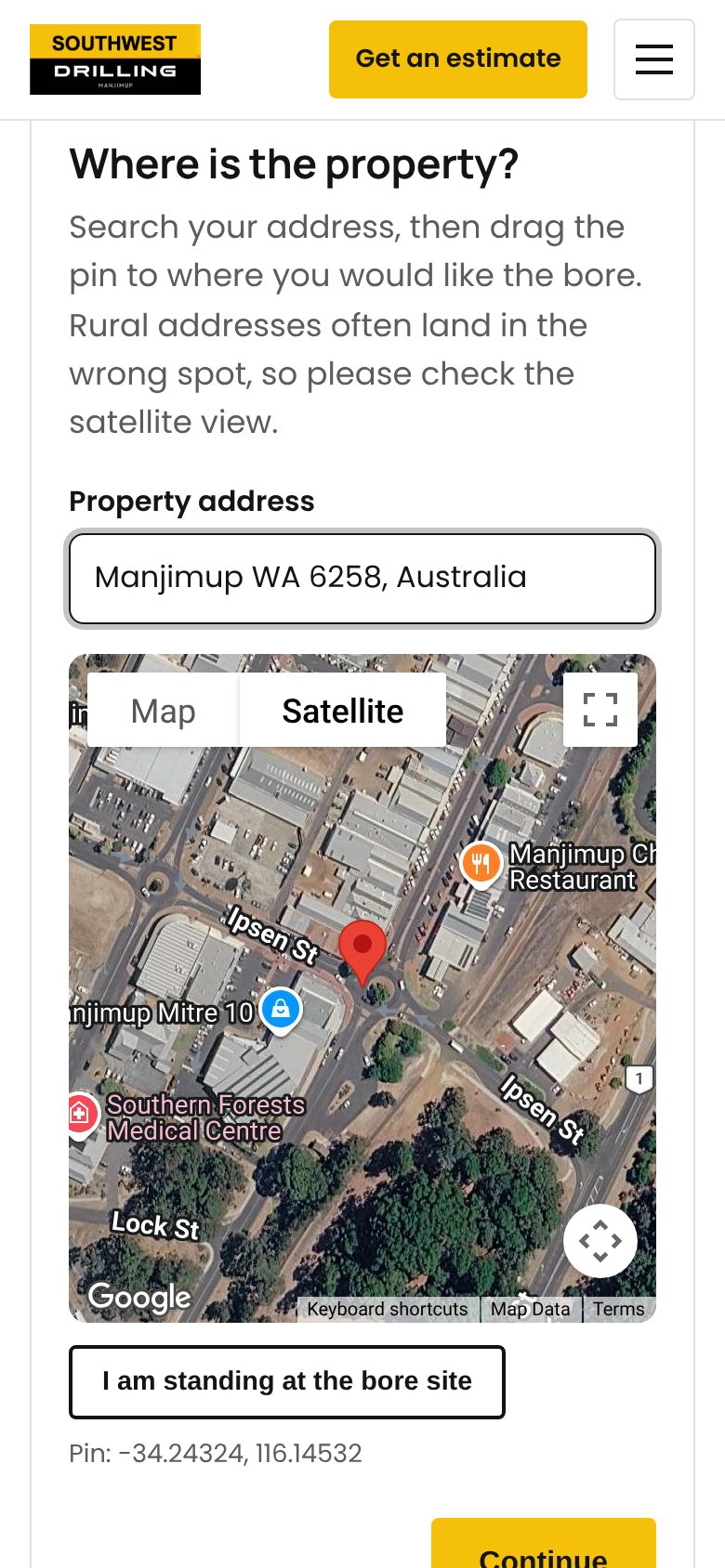
The customer places the bore, not just the address
BeforeA rural address was a rough starting point, and the bore position was settled on site.
NowThe customer searches the address, then drags a pin on a satellite map to where the bore should go, or taps “I am standing at the bore site” to use the phone’s location. Coordinates, not the street address, drive all the research that follows.
southwestdrilling.com.au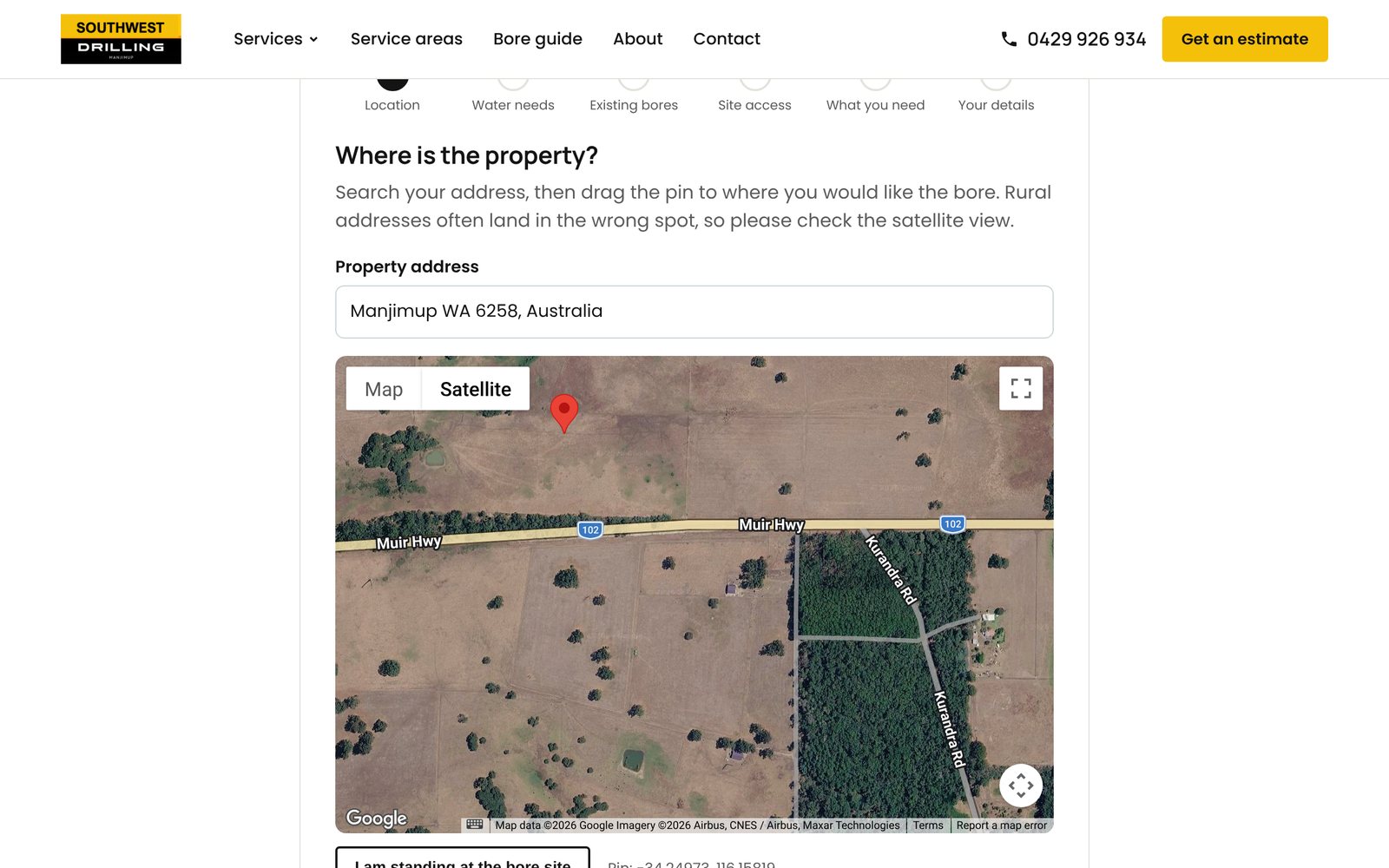
02 · Customer needs
Water use and access become numbers the tool can price
BeforeWater needs, existing bores and access were gathered in conversation.
NowEach ticked water use maps to an assumed daily peak demand. Existing bores on the property and next door are structured choices, access conditions such as 4WD only or soft ground are ticked, and the customer chooses drill and case or a complete turnkey bore.
southwestdrilling.com.au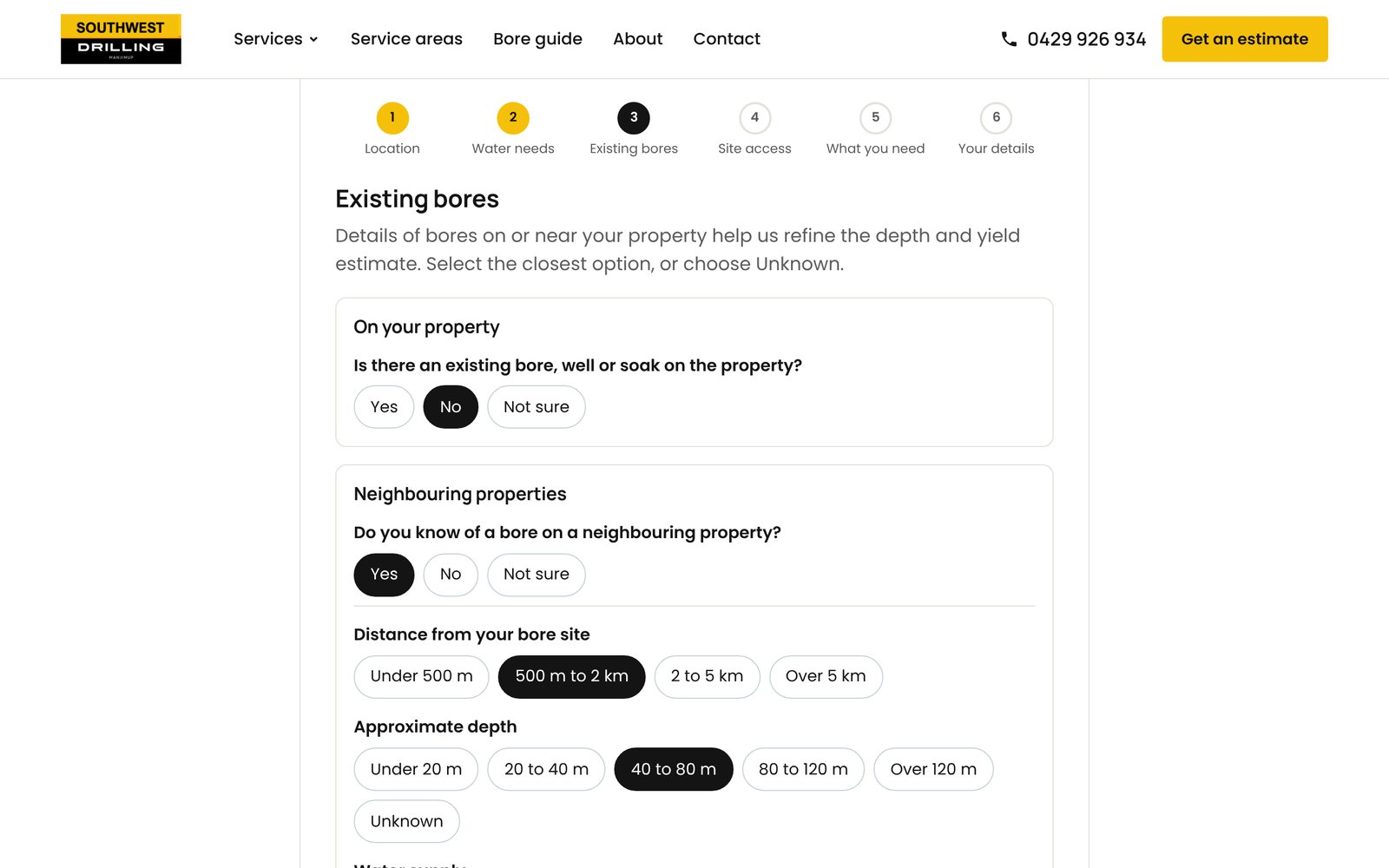
03 · Site research
Five government data layers checked the moment a request arrives
BeforeThe driller relied on local knowledge and manual record lookups.
NowOn submission the tool queries five layers of the state’s public water map service in parallel: groundwater and surface water areas, regional salinity, iron staining risk and recorded water sites within 10 km. It also calculates driving distance and time from the Manjimup yard. The customer watches each real result arrive.
southwestdrilling.com.au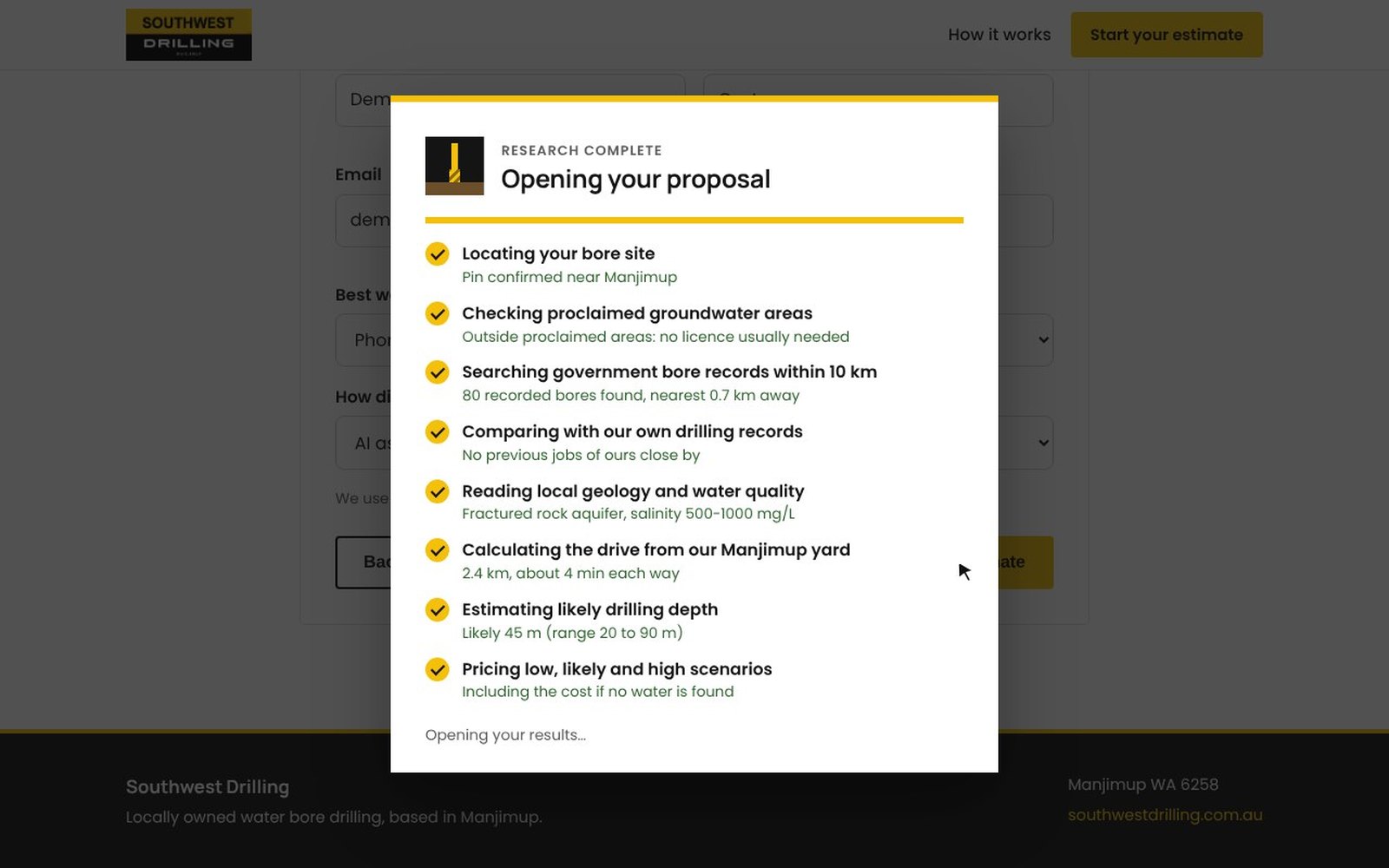
04 · Depth estimate
A depth range with stated confidence, not a single promise
BeforeDepth was an experienced guess, given verbally.
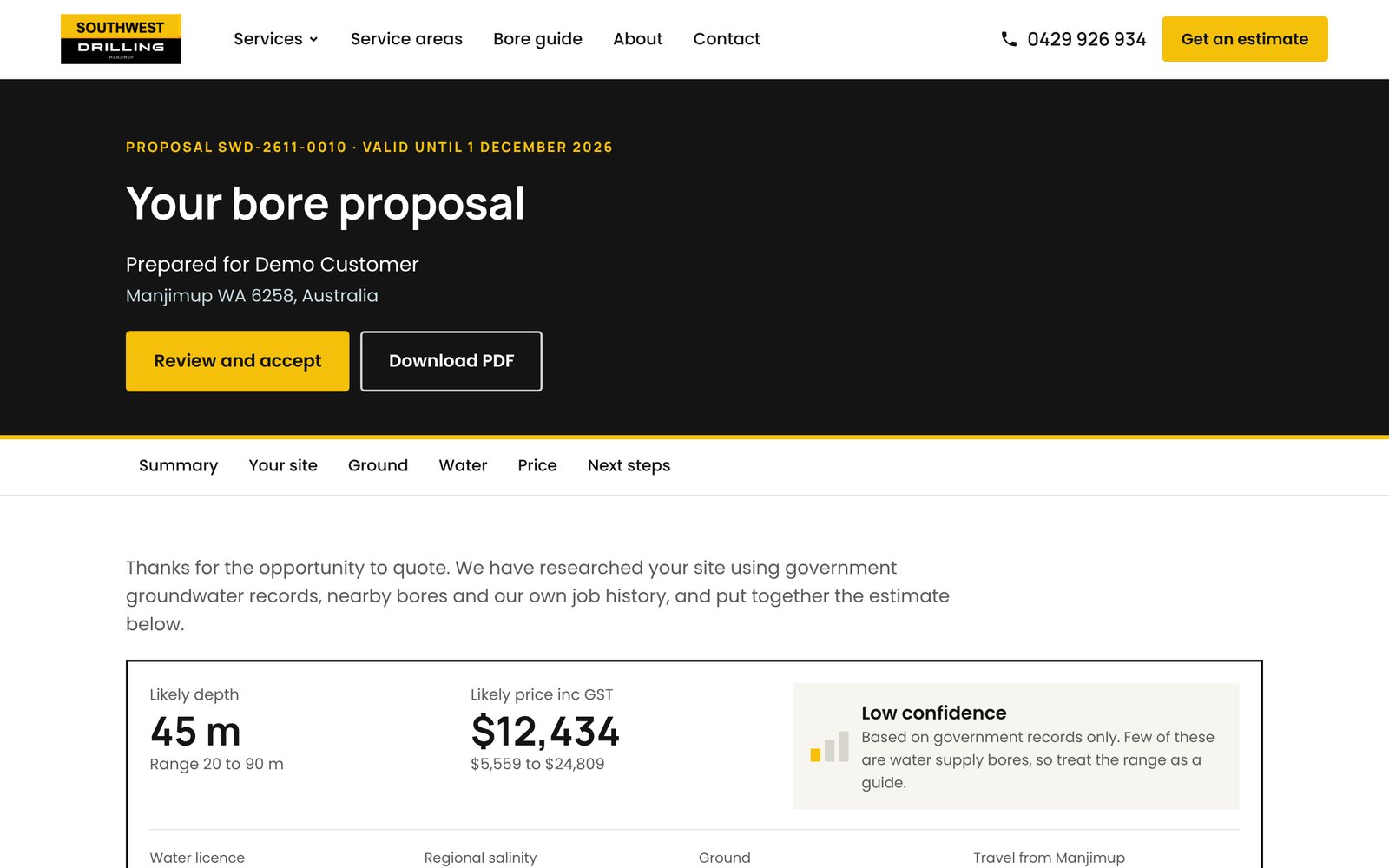
NowNearby bore depths are weighted by distance and source, and the low, likely and high depths come from weighted percentiles. Shallow monitoring bores count for less. In fractured rock the range widens and confidence stays low until the business’s own jobs exist nearby.
southwestdrilling.com.au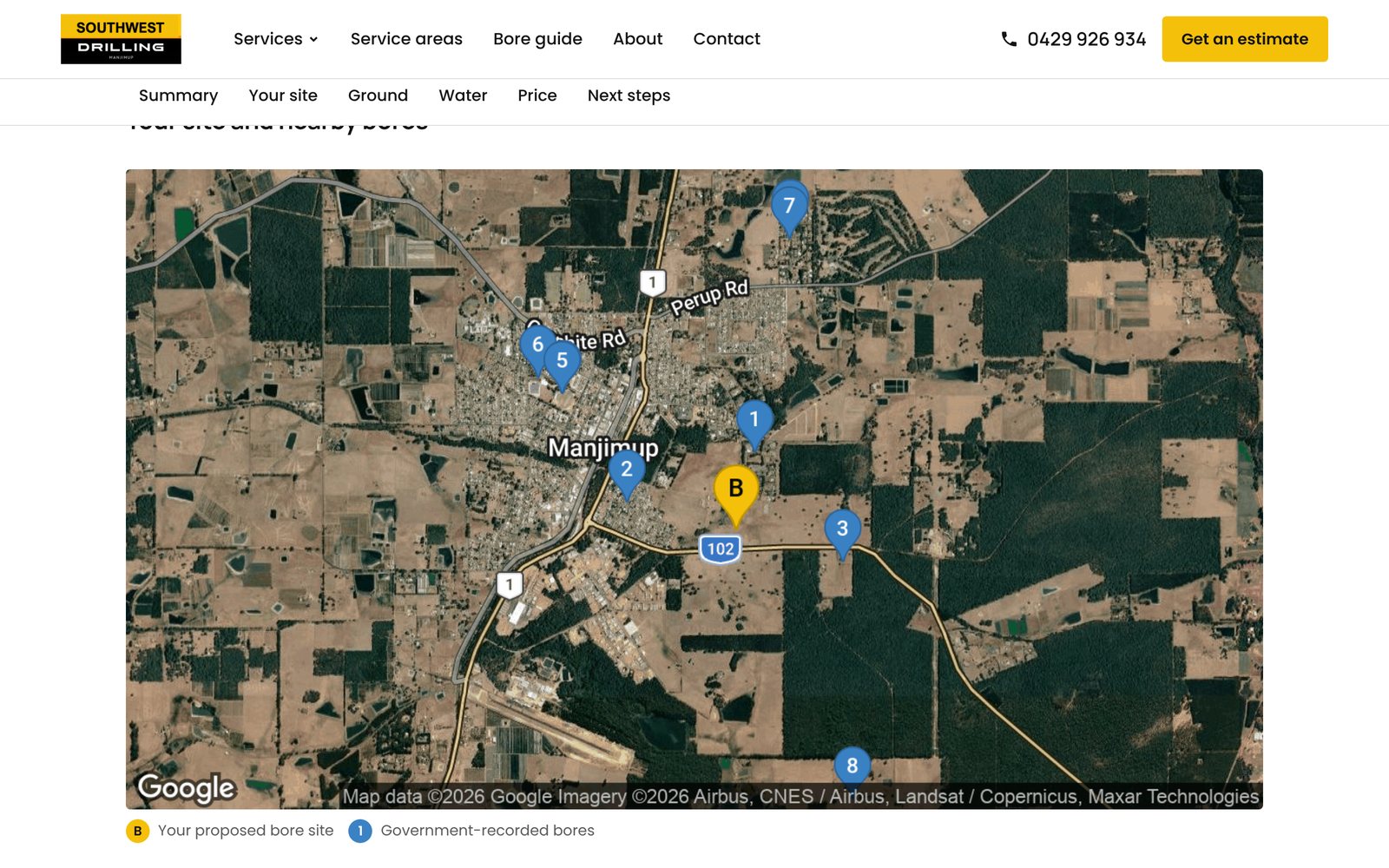
05 · Pricing
Four prices from one editable rate card
BeforeQuotes were worked out by hand for each job.
NowA pricing engine builds line items for low, likely and high depth plus a dry hole: travel, crew time, access surcharges, drilling per metre, dry hole discount and backfill, an optional water test, licence support and GST. Every rate is editable, and totals recalculate on save.
southwestdrilling.com.au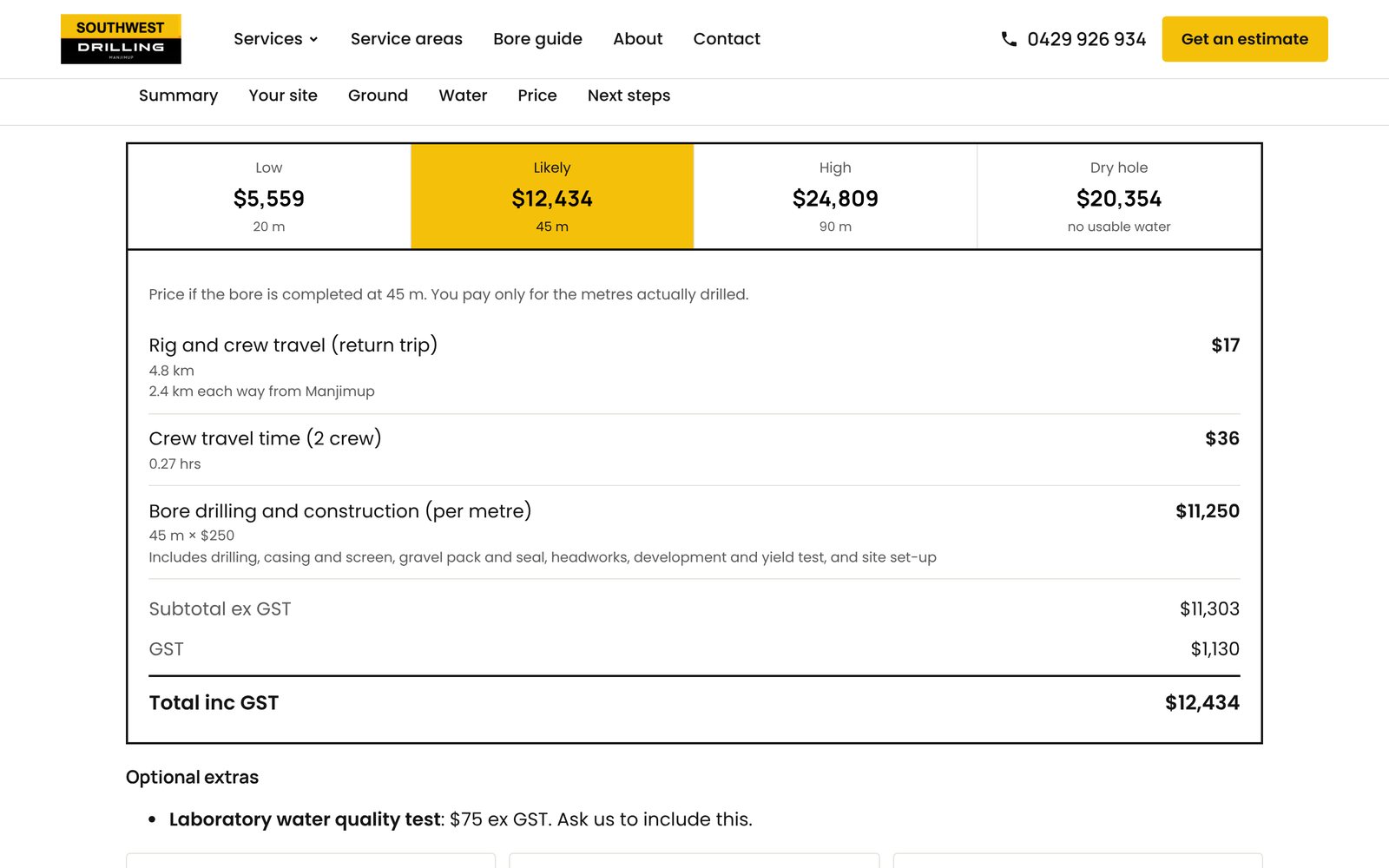
06 · Proposal
A researched proposal page and PDF for every request
BeforeWritten quotes were prepared one by one.
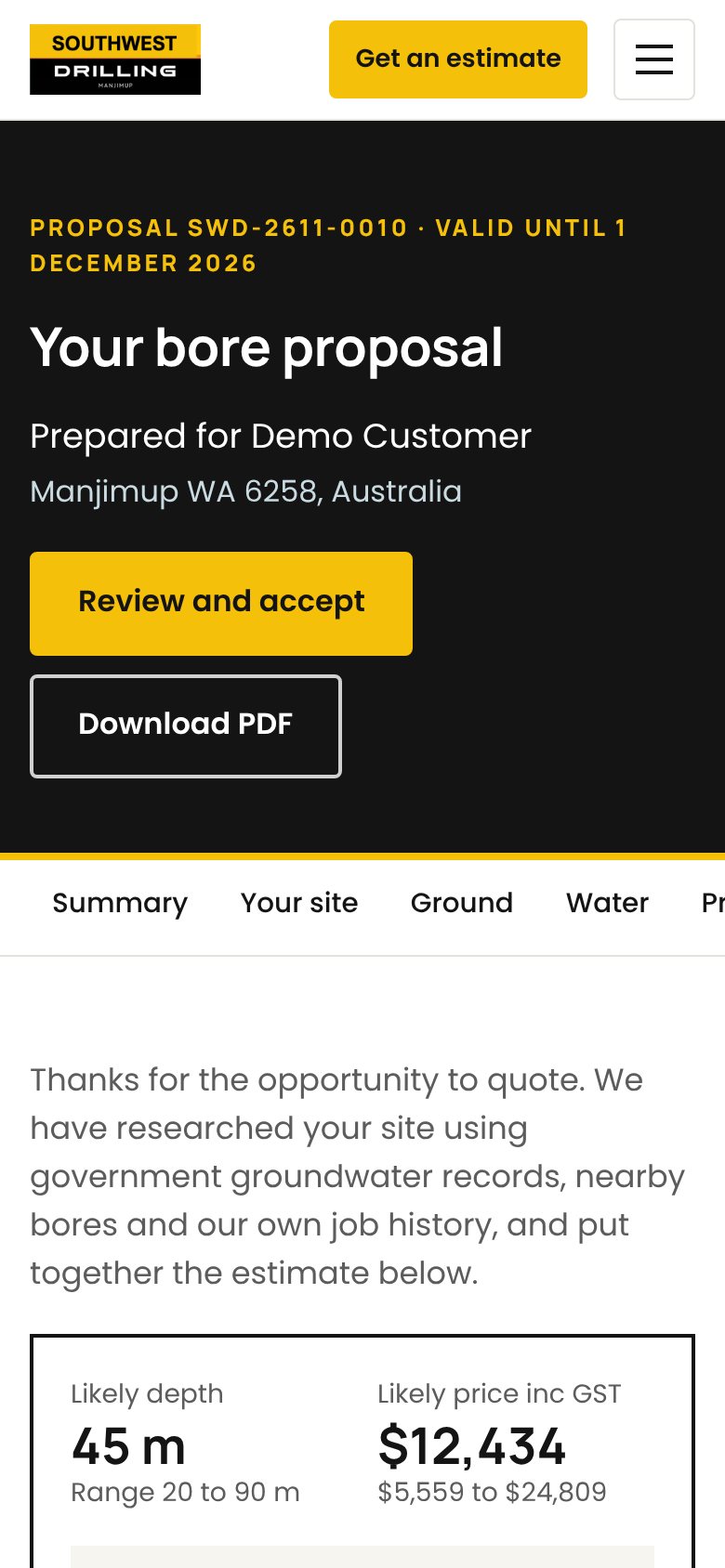
NowEach request produces a proposal on a private link: summary, nearby bore evidence on a numbered map, a ground cross-section, licence and salinity information, the prices and next steps, with a matching PDF. With auto-approval on, the customer goes straight to it; otherwise it waits for the owner.
southwestdrilling.com.au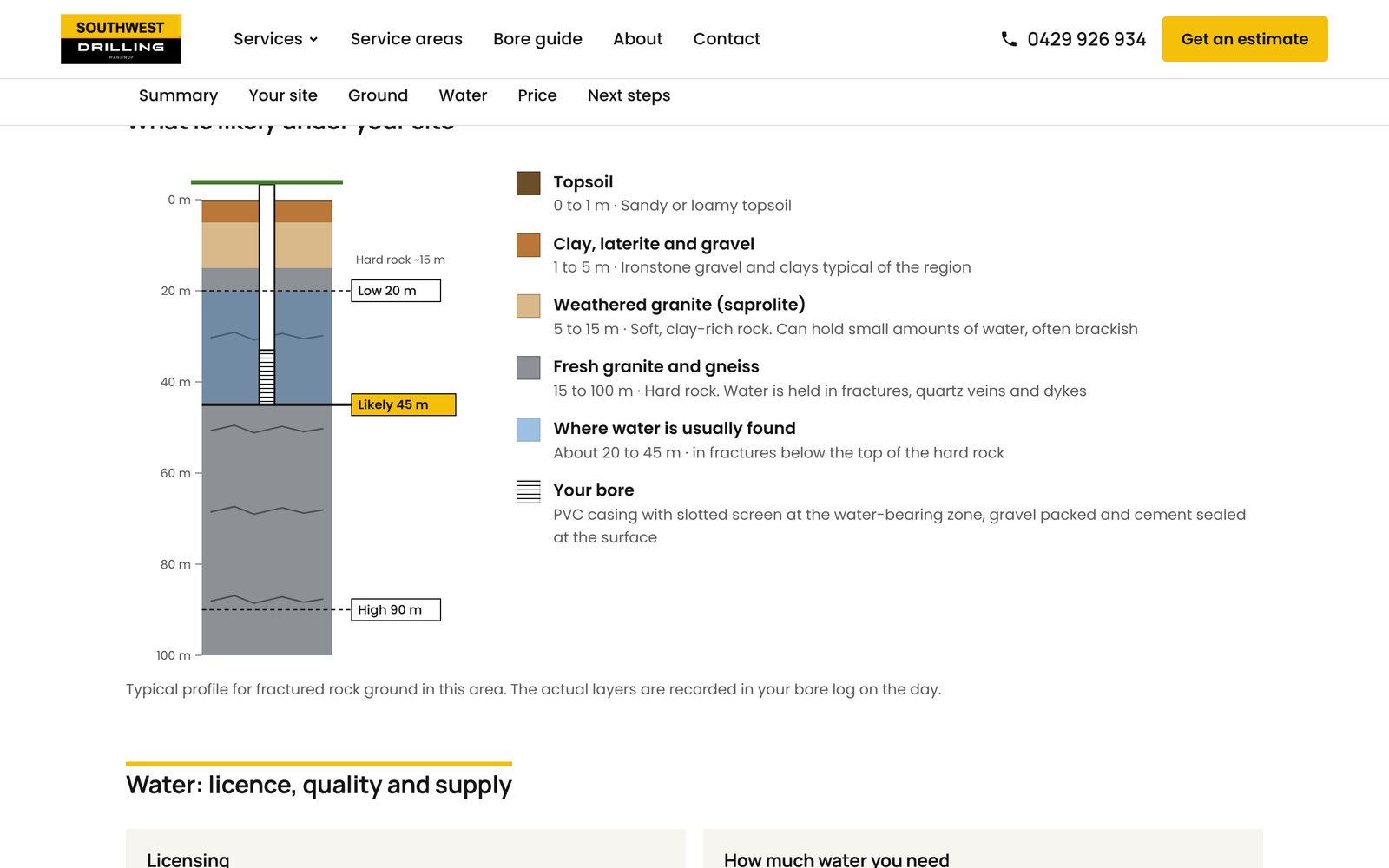
The expected ground profile under the bore siteThe proposal on a phone
07 · Acceptance
Six plain statements stand between reading and accepting
BeforeExpectations about depth, yield and water quality were agreed verbally.
NowThe customer ticks six statements, covering that depth, water, volume and quality are not guaranteed, the dry hole price and the terms, then types their name. The tool stores the name, time, IP address, browser and a locked snapshot of the exact proposal accepted.
southwestdrilling.com.au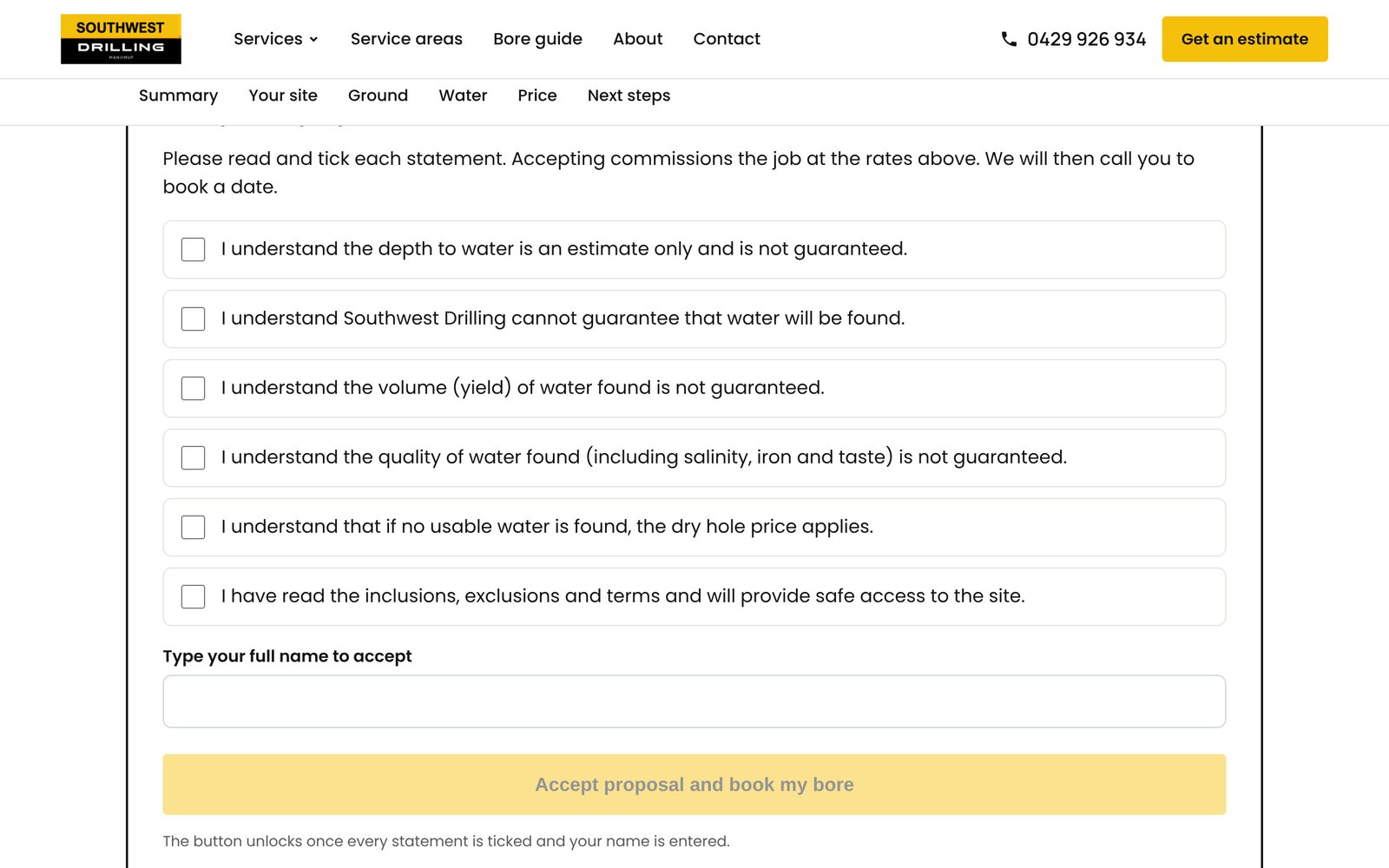
08 · Owner view
Every request, proposal and view in one admin
BeforeEnquiries and quotes lived across calls and messages.
NowThe admin lists each request with its research log, and each proposal with its status, view count and first-viewed time. A daily job expires old proposals. Rates, questions, wording and the approval mode are all edited without code.
What changed
A first estimate no longer needs a site visit
A customer now gets a researched depth range and four prices without a site visit, and accepts on stated conditions. The owner reviews or auto-approves.
No AI model runs inside the tool: every number comes from published data, recorded rules and the owner’s rates, so each figure can be traced. The tool itself was built with AI-assisted development, in a day.
Built and ready to switch on
Finished and tested on staging, waiting on the email and SMS accounts and the business’s job records.
- Business notifications
- Email and text alerts for new requests, failed research and acceptances, tagged when a proposal went out without review.
- Customer emails
- Six editable templates: request received, proposal sent, reminder and accepted, with replies routed to the business.
- Reminders
- The daily job is set up to remind customers who haven’t responded.
- Own job history
- Past jobs within 15 km weighted three times a government bore for depth and confidence, once records are loaded.